Tonal Harmony, 8th Edition, remains the definitive resource, expertly guiding students through the intricacies of Western musical structure and compositional practices.
What is Tonal Harmony?
Tonal harmony, at its core, is the study of chord progressions and their underlying principles within the context of a key or tonal center. It’s a system developed over centuries, largely solidified during the Common Practice Period (roughly 1650-1900), and continues to influence music today.
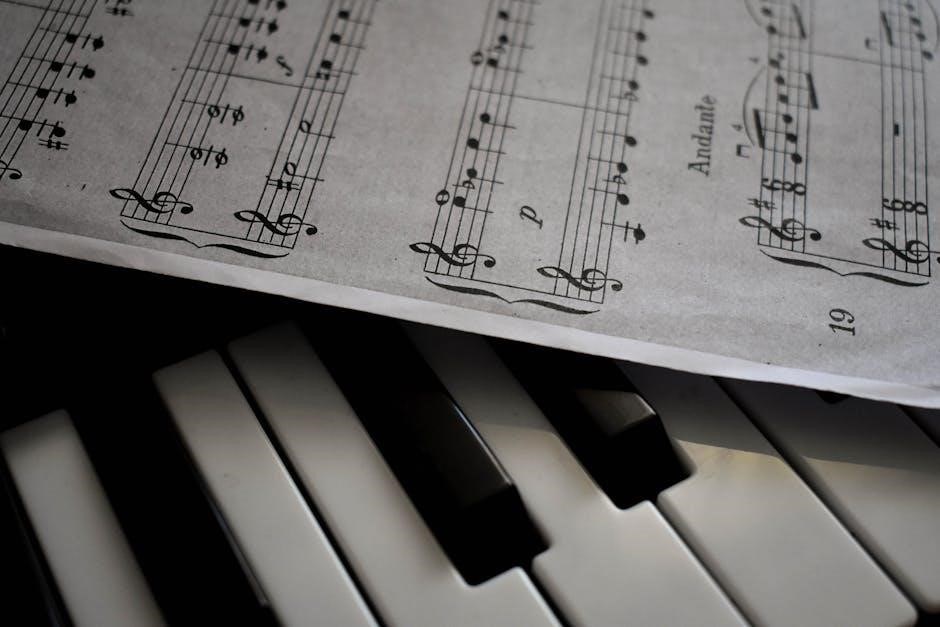
This approach examines how chords function – Tonic, Dominant, Subdominant – to create tension and release, ultimately defining musical form and expression. Understanding tonal harmony isn’t merely about identifying chords; it’s about grasping the relationships between them and how composers utilize these relationships to evoke specific emotions and create compelling narratives.
The 8th edition delves into these concepts with clarity, providing a strong foundation for analyzing and composing music rooted in this enduring system. It’s a gateway to understanding the language of much of Western music, from Bach to Brahms and beyond, offering invaluable insights for musicians of all levels.
Scope of the 8th Edition
This 8th edition of Tonal Harmony builds upon its established reputation, offering a comprehensive and meticulously updated exploration of tonal principles. While retaining the core strengths of previous editions – clear explanations, abundant examples, and a logical progression of concepts – it incorporates significant enhancements to reflect contemporary pedagogical approaches.
New features include expanded coverage of voice leading in complex progressions, a more nuanced discussion of chromatic harmony, and increased emphasis on analyzing music from diverse stylistic periods. The text also benefits from revised exercises and updated musical examples, ensuring relevance for today’s students.
Furthermore, supplementary online resources, accessible with the textbook, provide interactive drills, audio examples, and analytical tools to reinforce learning. The scope extends beyond theoretical understanding, fostering practical skills in composition and score reading, preparing students for advanced musical studies.
Part I: Fundamentals – Building Blocks of Harmony
Part I establishes a solid foundation, meticulously examining the essential elements – intervals, scales, and chords – crucial for understanding tonal construction.

Diatonic Harmony & Triads
Diatonic harmony forms the bedrock of tonal music, deriving its materials directly from the notes within a given key signature. This chapter meticulously explores the construction and function of triads – the fundamental building blocks of harmonic progressions. We delve into major, minor, diminished, and augmented triads, analyzing their intervallic structures and inherent qualities.
Understanding chord inversions is paramount, allowing for smoother voice leading and varied harmonic textures. The text provides extensive examples demonstrating how triads function as tonic, subdominant, and dominant harmonies within simple diatonic progressions. Emphasis is placed on recognizing these chords in four-part voicings, adhering to established principles of good voice leading – avoiding parallel fifths and octaves, and ensuring close harmonic spacing.
Furthermore, the chapter clarifies the relationship between triads and scales, illustrating how each triad is built upon a specific scale degree, and how these relationships contribute to the overall tonal coherence of a musical passage. Practical exercises reinforce these concepts, enabling students to confidently identify and construct diatonic triads in various keys.
Seventh Chords: Expanding Harmonic Palette
Seventh chords significantly enrich tonal harmony, adding color and complexity beyond the basic triad. This section systematically introduces the four primary types: major seventh, minor seventh, dominant seventh, and half-diminished seventh chords. We dissect their construction, focusing on the added seventh interval and its impact on the chord’s overall sound and function.
The dominant seventh chord receives particular attention, due to its strong tendency to resolve to the tonic, creating a compelling harmonic drive. Inversions of seventh chords are thoroughly examined, alongside their implications for voice leading. Numerous examples demonstrate how seventh chords function within common harmonic progressions, often serving as pre-dominant or cadential harmonies.
Students learn to identify seventh chords in musical scores and to realize them effectively in four-part voicings, maintaining smooth connections between chords. The chapter emphasizes the expressive potential of seventh chords and their role in creating harmonic interest and tension within tonal compositions.
Non-Chord Tones: Melodic Interest & Voice Leading
Non-chord tones are essential for creating melodic interest and sophisticated voice leading within tonal harmony. This section provides a comprehensive exploration of the most common types: passing tones, neighboring tones, suspension, retardation, appoggiatura, escape tone, and anticipation. Each is defined clearly, with detailed explanations of its characteristic motion and harmonic context.
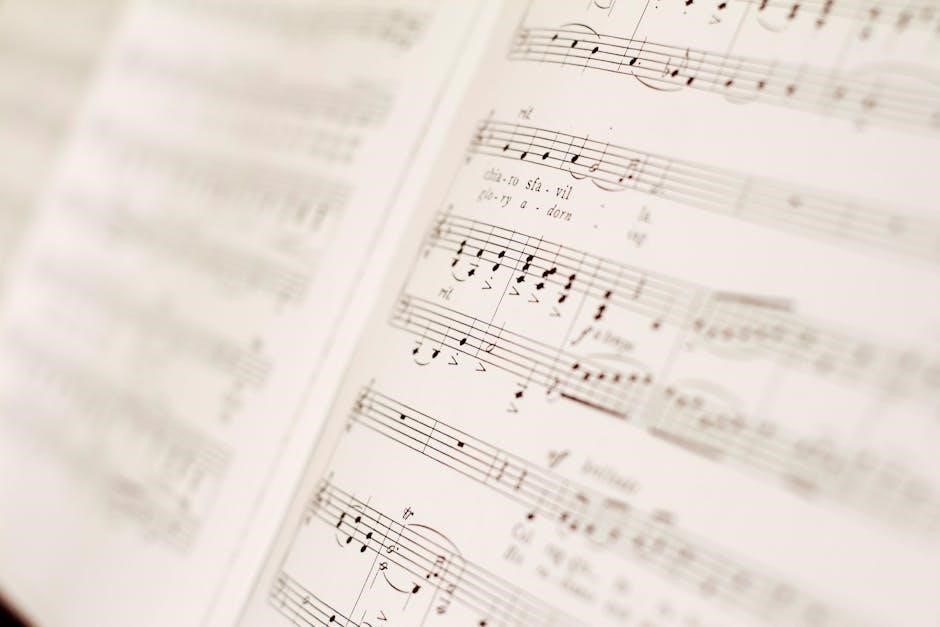
We analyze how these tones function to embellish the harmony, creating tension and release as they resolve to chord tones. Proper treatment of non-chord tones is crucial for achieving smooth and elegant voice leading, avoiding awkward intervals or dissonances.
Numerous musical examples illustrate the effective use of non-chord tones in various compositional styles. Students learn to identify them in scores and to incorporate them skillfully into their own harmonic writing, enhancing melodic contour and harmonic richness. Careful attention is given to avoiding common errors in their application.
Part II: Harmonic Progression & Analysis
Part II delves into the dynamic world of chord connections, exploring how harmonies move and interact to create musical form and expressive meaning.
Basic Harmonic Functions: Tonic, Dominant, Subdominant
Understanding harmonic function is central to tonal music analysis. These three chords – Tonic, Dominant, and Subdominant – represent the foundational pillars upon which countless progressions are built. The Tonic chord (I) establishes the key, providing a sense of rest and resolution; it’s the harmonic “home.” The Dominant chord (V) creates tension and strongly pulls towards the Tonic, acting as a powerful harmonic directive.
Finally, the Subdominant chord (IV) offers a pre-dominant function, preparing the ear for the arrival of the Dominant and ultimately, the Tonic. Recognizing these roles isn’t merely about identifying chords, but grasping their relationships within a key. This section meticulously examines these functions through numerous examples, demonstrating how composers utilize them to shape musical narratives and evoke specific emotional responses; We’ll explore inversions and their impact on functional clarity, solidifying your analytical toolkit.
Cadences: Defining Harmonic Closure
Cadences are the punctuation marks of tonal music, providing a sense of arrival, completion, or pause. They define harmonic closure and shape the listener’s perception of musical phrases. This section details the primary cadence types: Authentic, offering strong resolution (V-I); Plagal, a gentler conclusion (IV-I); Half, creating harmonic suspension (ending on V); and Deceptive, unexpectedly resolving (V-vi).
We’ll analyze how these cadences function in various musical contexts, exploring their melodic and rhythmic implications. Furthermore, we’ll investigate expanded cadences, incorporating passing tones and neighbor tones to enhance their expressive power. Understanding cadential formulas is crucial for both analytical precision and effective composition. Numerous musical excerpts will illustrate these concepts, enabling you to confidently identify and interpret cadences within complex tonal structures.
Modulation: Shifting Harmonic Centers
Modulation, the art of transitioning between keys, adds depth and variety to tonal music. This section explores techniques for smoothly shifting the harmonic center, moving beyond the stability of a single key. We’ll examine common-chord modulation, utilizing chords shared between keys, and chromatic modulation, employing altered chords to create seamless transitions.
Pivot chords play a vital role, acting as bridges between tonal areas. We’ll delve into remote modulation, exploring more distant key relationships and their expressive effects. Analyzing modulation requires identifying the original key, the target key, and the modulating chords. Numerous examples from the standard repertoire will demonstrate these principles, equipping you to recognize and understand how composers utilize modulation to create compelling musical narratives and emotional impact.

Part III: Advanced Harmonic Techniques
Part III delves into sophisticated harmonic concepts, expanding your analytical toolkit with secondary functions, chromaticism, and nuanced voice-leading strategies.
Secondary Dominants & Leading-Tone Chords
Secondary dominants dramatically enrich harmonic progressions by temporarily tonicizing chords other than the primary tonic. These borrowed dominant chords create a compelling pull towards their respective targets, adding color and sophistication to the musical texture. Understanding their function requires recognizing the temporary key area they establish before resolving back to the main key.
Closely related, leading-tone chords – particularly vii°/V and vii°/vi – function similarly, intensifying the harmonic drive. The diminished seventh chord built on the leading tone of another diatonic chord provides a strong pre-dominant function, heightening expectations for resolution. Mastering these chords unlocks a deeper comprehension of harmonic possibilities and allows for more expressive compositional choices.
This section provides extensive examples and exercises to solidify your ability to identify, analyze, and utilize secondary dominants and leading-tone chords effectively within tonal contexts, fostering a nuanced understanding of harmonic function.
Chromatic Harmony & Altered Chords
Chromatic harmony expands the tonal palette beyond diatonicism, introducing notes and chords outside the key signature. This section delves into the expressive potential of chromatic alterations – sharping or flattening chord tones – to create tension, color, and unexpected harmonic shifts. We explore how composers utilize chromaticism to subtly or dramatically deviate from established tonal expectations.
Altered chords, such as augmented sixth chords (Italian, French, German) and altered dominant chords (♭9, #9, #11), are examined in detail. These chords possess unique resolutions and contribute significantly to harmonic drama. Understanding their specific voice-leading tendencies is crucial for both analysis and composition.
Through detailed analysis of musical examples, you’ll learn to recognize and interpret the function of chromaticism and altered chords, unlocking a deeper appreciation for the complexities of tonal music.
Voice Leading in Complex Progressions
Mastering voice leading becomes paramount when navigating intricate harmonic sequences involving chromaticism, altered chords, and non-diatonic progressions. This section refines your understanding of smooth melodic connections between chords, minimizing leaps and maximizing stepwise motion to ensure elegant and logical harmonic flow.
We explore techniques for handling common voice-leading challenges, such as avoiding parallel fifths and octaves, resolving tendencies of altered tones, and creating effective bass lines. Special attention is given to voice leading in deceptive cadences and progressions involving secondary dominants.
Through practical exercises and detailed score analysis, you’ll develop the skills to craft sophisticated harmonic progressions that are both structurally sound and aesthetically pleasing, demonstrating a command of tonal voice-leading principles.
Part IV: Form & Analysis in Context
This section bridges theory and practice, applying harmonic principles to analyze musical forms and enhance comprehension of compositional structures effectively.
Harmonic Rhythm & Phrasing
Harmonic rhythm, the rate at which chords change, profoundly impacts musical phrasing and expressive qualities. Understanding its variations – from rapid successions creating tension to slower progressions establishing stability – is crucial for both analysis and composition. This chapter delves into how composers manipulate harmonic rhythm to delineate musical ideas, shape phrases, and build larger formal structures.
We’ll explore techniques like harmonic stasis, where a single chord is prolonged, and accelerated harmonic rhythm, used to intensify climaxes. Analyzing scores reveals how harmonic rhythm often aligns with melodic contours and rhythmic patterns, creating a cohesive musical texture. Furthermore, we’ll examine the relationship between harmonic rhythm and metric accentuation, demonstrating how composers use these elements to emphasize important structural points and create a compelling sense of forward motion. Practical exercises will reinforce these concepts, enabling you to effectively utilize harmonic rhythm in your own musical endeavors.
Analyzing Harmonic Structure in Common Forms (Binary, Ternary, Rondo)
Understanding how harmonic progressions function within established musical forms is paramount to comprehensive analysis. This section focuses on applying tonal harmony principles to Binary, Ternary, and Rondo forms, revealing how composers utilize harmonic language to define sections, create contrast, and establish a sense of overall coherence.
We’ll dissect the typical harmonic trajectories of each form – the contrasting key areas in Binary, the return to tonic in Ternary, and the recurring refrain in Rondo. Emphasis will be placed on identifying cadential patterns that delineate formal divisions and recognizing how modulatory schemes contribute to structural clarity. Through detailed score examples, we’ll demonstrate how harmonic rhythm and voice leading support the formal design. Exercises will challenge you to analyze unfamiliar pieces, solidifying your ability to discern harmonic function within these prevalent musical structures and appreciate their expressive potential.
Applying Tonal Harmony to Score Reading & Composition
This final section bridges the gap between theoretical knowledge and practical application, demonstrating how a strong grasp of tonal harmony enhances both score reading and compositional skills. We explore techniques for quickly and accurately identifying harmonic progressions within a full score, recognizing voice-leading subtleties, and understanding the composer’s intent.
For aspiring composers, we’ll delve into strategies for crafting compelling harmonic progressions, utilizing non-chord tones effectively, and creating convincing modulations. Exercises will focus on realizing figured bass, harmonizing melodies, and composing short pieces in various tonal styles. The goal is to empower you to move beyond rote memorization and confidently apply harmonic principles to create original and expressive music, fostering a deeper connection with the rich tradition of Western tonal music.

Resources & Further Study
Expanding your harmonic understanding doesn’t end with this text. Numerous supplementary resources are available to deepen your knowledge of tonal harmony. Explore online databases of musical scores, focusing on composers from the common practice period – Bach, Mozart, Beethoven, and Brahms – to analyze their harmonic language firsthand.
Consider supplemental workbooks for additional practice in harmonic analysis and composition. Websites offering interactive ear-training exercises are invaluable for developing aural skills. Further study in counterpoint and orchestration will naturally build upon the foundations established here. Don’t hesitate to consult with your instructor or seek out additional mentorship to refine your skills and explore specialized areas of harmonic theory. Continued exploration is key!